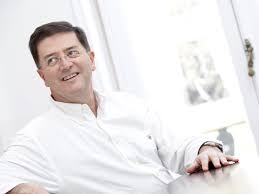
Luis Huete, professor ar IESE Business School and a well and a famous top management consultant was the special guest of the Strategic Leadership Forum event, organized by EXEC-EDU and Learning Network, last week.
Luis Huete ‘s presentation, during this event, pointed out some of the of the current leadership trends and outlined the characteristics of nowadays workforce. Huete also talke about the de „people engine” concept and how it is defined in our economical context.
Manager Express wanted to get more information on this topics, so we talked with Luis Huete about what does it mean to be overqualified or underqualified for a job and also about what are the best leadership formulas that companies should use today.
Can you explain the gap that you mentioned at the Strategic Leadership Forum event, the gap between those who are overqualified and those who are underqualified?
The demand of qualified talent is becoming borderless. Qualified workforce is the one with an advanced knowledge and skills in a domain sought after by many companies or institutions. The globalization of the demand and supply of qualified talent is creating a much larger number of opportunities for them compare with the rest of the population.
How does this gap appear? How does this gap affect salaries? Is it a dangerous phenomenon and if so why?
The gap, in an important part, is the result of a self-reinforcing mechanism. The more opportunities open for qualified talent the better options in terms of careers, job content, learning and salaries. Qualified knowledge if combines with financial knowledge would result in a strong creation of personal wealth. That can either increase the gap between the new rich (qualified talent with financial knowledge) and the new poor (unqualified knowledge with no financial knowledge) or serve as a mean for social mobility for the talented, hardworking individuals no matter his social and geographical background.
What do you mean by „people engines” and how do you correlate that to the idea of „business engines”?
The People engine is the leadership formula that makes employees and managers behave in a healthy way for the long-term sustainability of an institution. By healthy behaviors we mean alignment, commitment, collaboration, sharing information, accepting feedback, etc. Healthy behaviors tend to appear when the majority of the employees and managers develop a strong sense of believing and belonging.
How do you define „middle class”? What are it’s limits and what trends have you identified in the dynamics of those who are part of the middle class?
Middle class is defined as households with an annual income that ranges from 10.000 $ up to 100.000$. Definitely, the middle class tend to have a pattern of consumption that is partly predicable based on earlier cases. Moving from poverty to middle class brings also a mindset that make people more willing to protect what they have and more eager to progress economically.
What are the most important aspects that a strategic leader has to take into consideration nowadays?”
We need leaders that profoundly believe in the power of their personal example and credibility, also in their strong responsibility to set the direction and to ensure execution. Finally, we need leaders that know how to build bridges between individuals of their team that tend to work alone. Last, but not least, we need leaders that are capable of building a strong belief in their organization that “together we can do great things”.